Super Mario All-Stars vs NES Originals: Which Physics Feel Better?
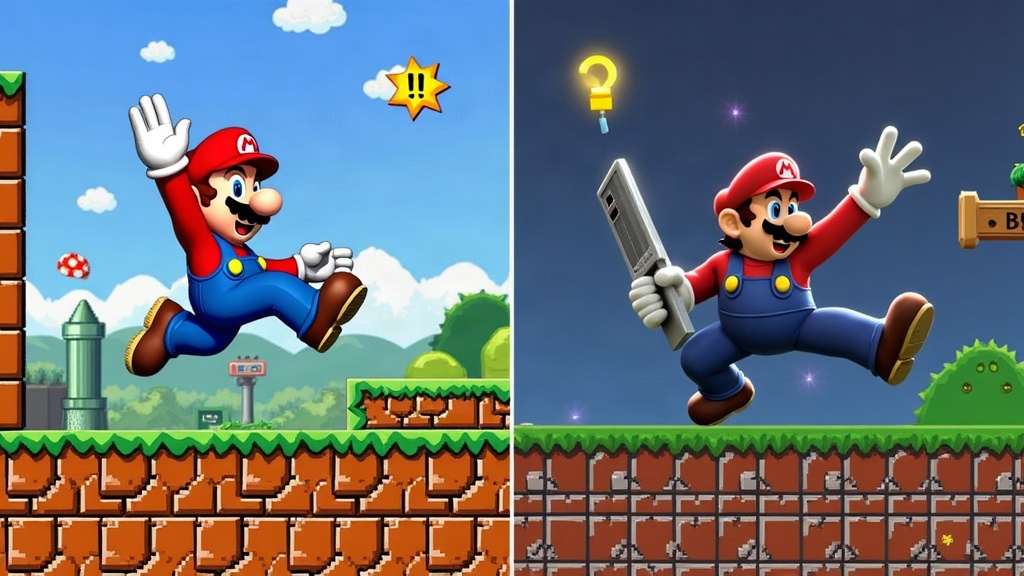
Super Mario All-Stars vs NES Originals
Here’s the question that actually matters: did Nintendo’s 1993 remaster genuinely improve the physics, or did it just quietly change something players still struggle to put into words? I spent dozens of hours jumping, sliding, and swimming through both versions back to back, and the short answer is this: the SNES collection feels smoother and more forgiving, but the NES originals keep a rawer, snappier response that plenty of long-time players still prefer when precision platforming is the goal.
Why This Comparison Still Matters
Super Mario All-Stars bundled Super Mario Bros., The Lost Levels, Super Mario Bros. 2 (USA), and Super Mario Bros. 3, all dressed up with 16-bit graphics and sound. Nintendo billed it as a faithful remaster, not a redesign. Except “faithful” and “identical” aren’t the same thing, and speedrunners, emulator tinkerers, and people just replaying their childhood games have been arguing over the physics gap for decades now.
Jump Arc and Air Control
The most obvious difference shows up in the jump curve.
- NES originals: Mario’s jump rises a bit more aggressively and falls with a sharper drop. Air control feels twitchy, and it rewards anyone who’s memorized pixel-exact timing for the trickier jumps, think Bowser bridge sequences where a single frame decides whether you fall into lava.
- SNES All-Stars: The arc is a touch floatier, with a smoother deceleration right at the peak. On paper the numbers aren’t wildly different, but the feel changes enough that veteran players usually notice it within the first two or three levels.
That floatiness isn’t a glitch. It’s a side effect of the SNES’s different frame timing, combined with how All-Stars rewrote collision detection to match its higher-resolution sprites.
Momentum and Acceleration
This is where the two versions really pull apart in actual play:
- On NES, Mario reaches full run speed a bit faster, which gives Super Mario Bros. 3’s slide-and-jump combos a tighter, snappier feel.
- On SNES All-Stars, there’s noticeably more inertia both starting and stopping, and it can wreck a frame-perfect stop on a narrow platform.
Casual players probably won’t even clock this. But if you’re chasing warp-zone skips or trying to juggle a Koopa shell across three enemies in a row, it’s the difference between pulling it off and eating a cheap death.
Collision Detection Differences
Since All-Stars redrew every sprite at higher resolution, the hitboxes shifted, sometimes just a pixel or two, sometimes enough to matter:
- Goomba and Koopa stomps feel a little more generous on SNES, forgiving near-misses that would’ve killed you on NES.
- Fireball and shell collisions in SMB3 get a few extra pixels of leeway on All-Stars, which quietly breaks some of the old “jump the flag at exactly the top” strategies.
And this isn’t just nostalgia talking. Frame-by-frame emulator comparisons from data-minded fans have documented the altered hitboxes directly.
Swimming and Underwater Physics
Water levels make the contrast obvious almost instantly:
- NES swimming feels heavy, slow to turn around, the kind of clunky that annoys some players but feels authentic to how games of that era were designed.
- SNES All-Stars swimming responds much faster to direction changes, and honestly makes the water levels feel a lot less punishing overall.
Which Version Should You Play?
- Choose NES originals if you’re a purist, a speedrunner, or you’re chasing the exact physics behind classic high-score runs and any% strategies.
- Choose SNES All-Stars if you’d rather have a polished, accessible experience with better visuals and slightly gentler collision behavior.
- Play both if you’re the type who geeks out over game history. The differences are subtle, but genuinely interesting, not a case of one version being flat-out better.
Common Questions
Does All-Stars run at a different speed? Frame rate targets are identical, but the internal physics constants got tweaked enough to feel different, especially around the jump’s peak.
Is All-Stars easier because of this? A little, yes. That floatier jump combined with the more forgiving hitboxes softens several notoriously hard sections.
Which version do speedrunners actually use? NES originals, still, because the world records and established routes are all built on that version’s physics.
Final Verdict
Neither version wins outright. They’re just tuned differently. NES originals reward the precision and muscle memory built up over decades of tight platforming design. Super Mario All-Stars trades a bit of that snap for smoother, more approachable physics without straying far from the source. Want the definitive competitive feel? Stick with NES. Want the most enjoyable replay today? All-Stars is the smarter pick.