The Tragic Rise and Fall of Sega Dreamcast VMU Mini-Games
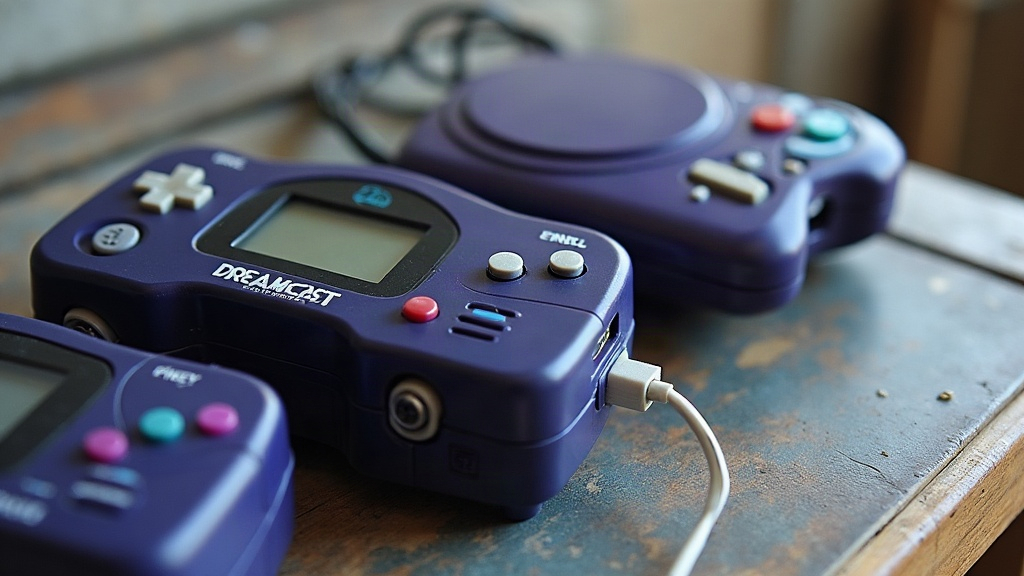
Long before smartphones took over our pockets and years before the Nintendo DS made dual screens feel normal, Sega shipped a piece of hardware that quietly changed the rules of the game industry: the Visual Memory Unit, or VMU. Plug it into a Dreamcast controller and you got a small memory card with its own LCD screen, its own D-pad, and its own action buttons. What happened next is a strange little story, half triumph, half cautionary tale, about a genuinely clever idea getting crushed by weak batteries and a console that didn’t get enough years to grow up.
What Was the Visual Memory Unit (VMU)?
Launched alongside the Dreamcast in 1998 (1999 for North America), the VMU was never meant to be just a save card. Sega built it as a hybrid device, something that lived in the space between your living room console and a pocket handheld.
Docked in the controller, it worked as a second screen: private stats, animated logos, real-time HUD info the TV never showed. Pull it out, though, and pop in two CR2032 coin batteries, and suddenly it was its own little handheld. That flexibility is what let developers dream up companion mini-games, tiny experiences you could carry to class, tuck into a work bag, or fiddle with on a bus ride home.
The Golden Era of VMU Mini-Games
For a short window, this thing was the coolest gimmick in gaming. Developers figured out fast that letting players inch forward in a huge console game while sitting in a waiting room somewhere was a genuinely fun hook.
A few examples still get brought up by anyone who owned a Dreamcast:
Chao Adventure (Sonic Adventure)
The most famous VMU mini-game, full stop. Chao Adventure worked a lot like a Tamagotchi: you pulled your Chao out of Sonic Adventure, fed it, trained it, ran it through little memory games during the day. Whatever stats you built up on the go actually mattered back home, because they carried straight into the console game’s Chao races that night. It was one of the few times a portable tie-in genuinely fed back into the main experience instead of just existing alongside it.
Pinta’s Quest (Skies of Arcadia)
RPGs and the VMU turned out to be a natural pairing. Pinta’s Quest let Skies of Arcadia players grind for gold, items, and experience away from the TV, so instead of dreading the usual RPG busywork, you could knock it out on the VMU and sync it back later. Boring grind, turned into a pocket distraction. Smart move.
Private Information Displays
Not mini-games exactly, but the second-screen trick on its own was impressive for 1999:
- Resident Evil Code: Veronica: Your health bar lived on the VMU instead of the TV, so the screen stayed clean and cinematic.
- NFL 2K: Players picked their plays on the VMU so the person sitting next to them on the couch couldn’t peek and call the defense.
The Tragic Flaws: Why the VMU Failed
For all its charm, the VMU had some genuinely fatal problems baked into the hardware, and the market didn’t cut it any slack either.
- Atrocious Battery Life: Two tiny CR2032 watch batteries were supposed to keep this thing running, and they just couldn’t. Heavy users burned through a set in a couple of weeks, sometimes in a matter of days.
- The Infamous “Beep of Death”: Turn on a Dreamcast with a dead VMU plugged into the controller, and it screamed at you, a sharp, high-pitched beep that every retro gamer of a certain age still remembers with a wince. Honestly, that sound might be the device’s most durable legacy.
- Severe Storage Limits: 128KB total, split into 200 blocks. That’s it. Download one mini-game and you could easily eat up enough space to force a choice between keeping your console save file or holding onto your portable game. Not a fun trade-off.
- The Death of the Dreamcast: And then the console itself died. Sega couldn’t compete once the PlayStation 2 loomed on the horizon, and by 2001 the Dreamcast was discontinued, dragging the VMU down with it right as developers were finally starting to figure out what the thing was capable of.
The Lasting Legacy of the Dreamcast VMU
Short-lived, sure, but not forgettable. Sega proved something real here: people liked the idea of carrying a sliver of their console experience around with them.
You can trace that DNA forward pretty easily. The Nintendo DS and later the Wii U leaned hard into second-screen design. Even today’s companion apps, think the Destiny item manager or the Red Dead Redemption 2 map app on your phone, are basically spiritual descendants of what Sega was fumbling toward back at the turn of the millennium.
The rise and fall of the Dreamcast VMU mini-games says a lot about Sega’s willingness to take risks nobody else was taking. It was a beautiful, battery-draining experiment, and honestly, it just showed up too early for the tech to keep pace with the idea.