Cardboard Shoeboxes to Custom Acrylic Cases: Storing Genesis Carts
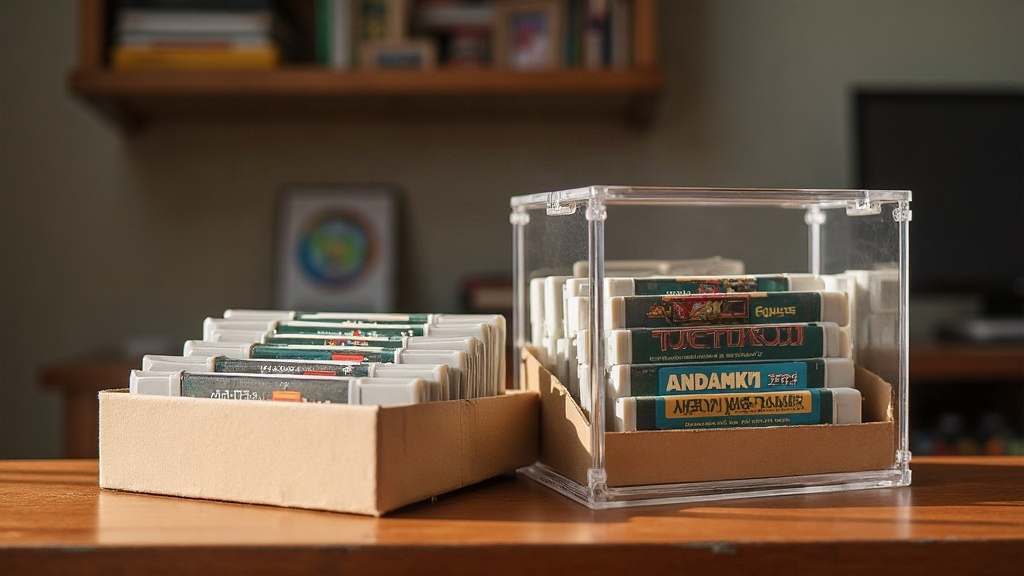
If you’ve ever dumped a pile of loose Sega Genesis cartridges into a dusty shoebox “just for now,” you already know how fast “for now” turns into three years. Storing loose Genesis cartridges doesn’t take a big budget to get started, but it does take a plan. Cardboard, humidity, and stacked plastic are not friends to a 30-year-old circuit board. This guide walks through a path that actually scales: free cardboard fixes for beginners, all the way up to custom acrylic cases for serious collectors, so your approach can grow alongside your shelf instead of fighting it.
Why Cartridge Storage Actually Matters
Genesis cartridges aren’t just nostalgic plastic shells. Inside and on them you’ve got exposed PCB connectors (the “fingers”), battery-backed saves on some games, and labels that fade or peel the moment sunlight or humidity gets involved. Poor storage leads to a handful of predictable problems:
- Connector oxidation from humidity and dust buildup
- Label damage from stacking, sliding, or UV exposure
- Physical cracking from pressure when cartridges get crammed together
- Lost resale value, since condition is basically everything in the retro market
Here’s the good news: you don’t need museum-grade gear on day one. What you need is a storage tier that actually matches your collection’s size and your goals for it.
Tier 1: The Cardboard Shoebox (Starter Stage)
For collections under 20 to 30 carts, a shoebox is genuinely fine, as long as you make a few tweaks:
- Line the bottom with acid-free tissue paper or toss in a silica gel packet to keep moisture in check
- Store cartridges vertically, label facing one direction, the way you’d shelve books
- Never stack cartridges flat on top of each other. The connector edge can crack under that kind of weight
- Keep the box out of garages, basements, or attics. Temperature swings are the real enemy here, more than dust ever is
Think of this stage as cheap triage, not an archive. It’s a holding pattern while you figure out which titles are actual keepers and which are just filling space.
Tier 2: Modular Plastic Bins and Cartridge Sleeves
Once you pass 30 to 50 games, it’s time to upgrade: stackable plastic bins with dividers, or individual anti-static sleeves for anything worth protecting. The payoff:
- Clear bins let you sort visually by genre, condition, or value at a glance
- Dividers stop cartridges from sliding around and chipping edges against each other
- Anti-static sleeves add a real layer of protection for valuable or rare titles (think Panorama Cotton, Beggar Prince, that tier)
This is the sweet spot for most casual-to-mid-size collectors. Low cost, solid protection, and you can expand shelf by shelf without rethinking the whole system.
Tier 3: Custom Acrylic Cases (Advanced/Display Stage)
Once your collection starts functioning as a display piece, or once it includes high-value sealed or boxed cartridges, custom acrylic cases start making real sense:
- UV-resistant acrylic keeps labels from fading under shelf or room lighting
- Precision-cut slots hold cartridges snugly without putting pressure on that connector edge
- Stackable or wall-mountable designs turn storage into something you actually look at, not something buried in a closet
- Plenty of collectors source these from Etsy sellers or 3D-printing and laser-cutting hobbyists who specialize in retro game cases
Acrylic cases run more per unit, usually somewhere between $3 and $15 depending on thickness and finish. That’s why most people reserve them for complete-in-box items, rare titles, or anything they actually want on display, rather than for every single cart they own.
Building a Scalable Strategy
The smartest move isn’t picking one method and sticking with it forever. It’s tiering your collection:
- Common, played-often carts → plastic bins with dividers
- Rare or valuable carts → individual acrylic cases or sleeves
- Duplicates or bulk lots → cardboard boxes, clearly labeled
- Display favorites → acrylic display cases on a shelf
This is basically how serious collectors handle trading cards, comics, and vinyl too: cheap storage for the bulk of it, premium protection reserved for what’s actually worth protecting.
Quick Environmental Checklist
No matter which tier you’re working with, a few rules apply across the board:
- Keep humidity between 40 and 50%
- Avoid direct sunlight hitting any shelf or case
- Wipe connectors down periodically with isopropyl alcohol and a soft cloth
- Store everything in a climate-stable room, never a garage or attic
Conclusion
Storing loose Genesis cartridges well doesn’t require an all-or-nothing investment up front. Start with a lined shoebox for sorting things out, move up to plastic bins with dividers as the collection grows, and save custom acrylic cases for the titles that genuinely deserve protection and a spot on display. Match the storage tier to the value and purpose of each cartridge, and the whole system stays scalable, affordable, and actually protective for the long haul.